{{#ev:vimeo|16292363|480px|center|''[[w:A Computer Animated Hand|w:A Computer Animated Hand]]'' is a 1972 short film by [[w:Edwin Catmull]] and [[w:Fred Parke]]. This was the first time that [[w:computer-generated imagery]] was used in film to animate likenesses of moving human appearance.}}
{{#ev:vimeo|16292363|480px|center|''[[w:A Computer Animated Hand|w:A Computer Animated Hand]]'' is a 1972 short film by [[w:Edwin Catmull]] and [[w:Fred Parke]]. This was the first time that [[w:computer-generated imagery]] was used in film to animate likenesses of moving human appearance.}}
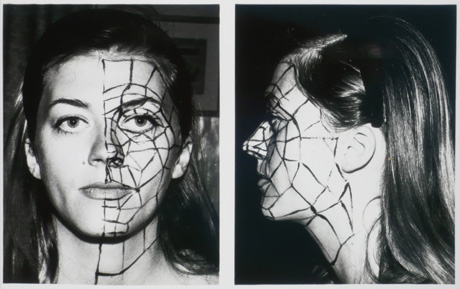
| First known geometry capture of a human face by [[w:Henri Gouraud (computer scientist)]] of his wife Sylvie Gouraud. <br /><small>Images linked from [https://interstices.info/images-de-synthese-palme-de-la-longevite-pour-lombrage-de-gouraud/ interstices.info]</small>
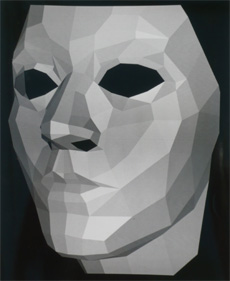
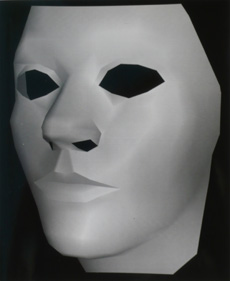
| Synthetic human-like fake by [[w:Henri Gouraud (computer scientist)]] made of his wife Sylvie Gouraud. <br /><small>Images linked from [https://interstices.info/images-de-synthese-palme-de-la-longevite-pour-lombrage-de-gouraud/ interstices.info]</small>
w:Maeil Broadcasting Network in South Korea published an AI news anchor in November 2020 made in conjunction with MoneyBrain. You can enable YouTube auto-generated English subtitles by enabling closed captioning (cc) and then clicking on the setting icon on the video control bar.
Video 'This AI Clones Your Voice After Listening for 5 Seconds' by '2 minute papers' describes the voice thieving machine by Google Research in w:NeurIPS 2018.
#w:Adobe Voco. Adobe Audio Manipulator Sneak Peak with w:Jordan Peele (at Youtube.com). November 2016 demonstration of a Adobe's unreleased sound-like-anyone-machine, the w:Adobe Voco at the w:Adobe MAX 2016 event in w:San Diego, w:California. The original Adobe Voco required 20 minutes of sample to thieve a voice.
A short film 'Doll Face' by Andrew Thomas Huang (.com). There are various unofficial videos using 'Doll Face' as graphics, but with different music. from 2005.
Music video for Bullet by w:Covenant from 2002. Here you can observe the classic "skin looks like cardboard"-bug that stopped the pre-reflectance capture era versions from passing human testing.